Sunday, May 18, 2014

Are we approaching the end of healthy competition?

This year alone has brought about several headline-acquisitions:
*Note: Most of, if not all of these deals, are still under review by various governments globally, before being finalized. Additionally, this is a VERY short list. There have been other rumors, and announced deals this year, globally, that pertain to technology. 

Now, there's a new rumor circulating that certainly sounds realistic (and terrifying) YouTube (Google) is about to finalize negotiations to purchase the Game streaming service Twitch. Why would I consider this terrifying? Simple: YouTube (Google) is getting closer and closer to owning all user-submitted video services on the internet. Additionally, rumor has it that Microsoft, and possibly Yahoo were attempting to court the young Twitch service, but were turned down. While it still would have been unfortunate that our options are thinning out, at least it would be someone other than Google offering a video service. This is something we really need (I am glad Yahoo! is releasing their own service).

So why do I bring this up? It's simple: this year in particular has seen a few large fish swallow-up everything they possibly can. In the end it means we the user have two options when choosing certain services. Example: Internet providers, Comcast or T.... erm... make that one option.
Okay, so that's not entirely accurate. The point is, we are losing options. We will soon only have one real option for cable-internet. On the flip-side, AT&T has stated that if the FCC approves their purchase of DirecTV (without placing any regulations or stipulations), they will honor the old Net Neutrality rules for 3 years. Though that's still a crap-shoot.

When Facebook announced the purchase of WhatsApp and Oculus, there was an outcry from users, claiming they would no longer use the services. I heard/read very little positive responses from users towards the acquisitions (though analysts acted positively). Comcasts purchase of Time Warner is largely considered the reason Comcast was voted the worst company in America. People were outraged and concerned about Google purchasing Nest (I was actually close to purchasing one, before Google swooped up the company). Even though the deal has not been officially announced yet, even fans of Google and YouTube are disgruntled about the possible acquisition. We like options. We don't necessarily need a million options, but we want options. Most notably, people that do not use Android or Chrome OS (especially Windows Phone and Xbox users) are typically especially concerned when Google purchases a company that currently (in one way or another) supports their preferred platform. After all, Google has continually showed a desire to stifle competition whenever they can.

I will end this post with a "humorous" note: Microsoft, Facebook, and Google all claim to encourage and foster startup companies. However, as soon as any of them become anything, they try to swoop them up. The future is starting to look like a 10 (random number) company world. 

The final count-down: MI to CA

We've known since February 4th, that we will be moving to CA this summer. As we have gotten closer to the summer months, my transfer from one of my employers divisions in MI to another division in CA has been finalized. I've begun training for the projects I will be working on/overseeing/taking over once I start at the other office. Our last day in MI is June 6th. After work, we'll hop in the car with our two faithful companions (the kittens Linux & Nibbler), and start our week long adventure! We are quite excited. While we are excited to leave MI, and be in a state neither of us have lived in, I am most excited about working in Silicon Valley. I feel that most engineers in the tech industry would be excited about living and working in one of (if not the) biggest tech hubs in the world.

All of that being said, we're looking for tips and recommendations from those the internet. Please feel free in the comments to respond to any or all of the following:
  • What are the best sites to see and places to visit in CA? 
  • If you were taking a roadtrip and had up-to a week to travel, what route from MI to CA would you take? What sites would you see? 
  • In general, what recommendations do you have?  (This will be our second cross-country roadtrip in the last year). 
  • What's your stance on tinting windows? Would you/have you done it, and is it worth it? 
  • If you've traveled long distance with pets, especially cats (ours are about 9 months old), what recommendations do you have?
  • We will be taking videos of the trip, as well as TONS of pictures (last time we took around 600, we plan to beat that). What cameras/camcorders do you guys recommend? (We have two Nokia Lumia 920's (which we love!)  and are trying to decide if it's worth upgrading to 1020's/1520's or just picking up a camera/camcorder (especially since new devices are on the horizon)). 
  • Anything else you'd recommend? 

Digital vs. Physical: Music

This is Part 3 of my “Digital vs. Physical” series. For those just joining, that have not read the prologue post, this series is about digital and physical media, such as games and music, and TV shows. 

To be honest, I personally feel like there is very little to debate about for this topic. Seriously. In many ways I would consider music and audio based media to be trailblazers for digital content. When Napster was released in 1999, it took off relatively quickly, for the time. It allowed users to download MP3 files of their favorite music via P2P network. By January of 2001, it had over 10 million users.
Napster was closed down by a court order in the summer. However, digital music continued in the form of Apples iTunes service. While it was best used with Apple devices, such as iPods, iPads, and iPhones, it still garnered attention (and use) from consumers on every platform. In February of 2013, Apple celebrated 25 billion songs sold. In fact, at the time Apple claimed that over 15,000 songs were being downloaded per minute.

I remember 15 years ago, when CD's were the preferred means of getting your music fix. It was what felt like a million times better than cassettes. Even in high school, August 2005 - June 2009, CD's were the "it" medium for music. Sure, many people had iPhones and iPods, as well as Sony Erickson Walkman, and even a few Zunes, but most of the people I knew still used CD's. In college I noticed the quick transition from CD's to downloaded music. But is purchasing a digital copy really the best solution? 

Over the past few years there has been a tremendous push to transition from downloading music and paying per song or album, to streaming. Sure, in some cases we still download the music for offline enjoyment, but we don't expect to pay per song all that much anymore. Here are the 13 most well known streaming services (some, like Xbox Music will allow you to download the music for offline listening). 
Catalog Quality Platforms Price
Beats Music 20m 320 Kbps Android, iOS, Web, Windows $10/mo.
Google Play 20m 320 Kbps Android, iOS, Web Free or $10/mo. extras
Grooveshark Unknown Unknown Android, Web Free w/ads, $6/mo., $9/mo. mobile
iHeartRadio 15m Unknown Android, BlackBerry, iOS, Web, Windows, Xbox Free
iTunes Radio 26m 256 Kbps Apple TV, iOS, OS X, Windows Free w/ads or $25/yr
Last.fm Variable 128 Kbps Android, iOS, Linux, OS X, Windows, Sonos, Web Free or $3/mo. extras
Sony Music 25m 320 Kbps Android, iOS, PlayStation, Web, TVs $5/mo. or $10/mo. mobile
Pandora 1m 192 Kbps Android, BlackBerry, iOS, Roku, Sonos, Web, Xbox Free w/ads or $5/mo.
Rhapsody 32m 192 Kbps Android, iOS, Web, Windows, Xbox $10/mo.
Rdio 20m 192 Kbps Android, BlackBerry, iOS, OS X, Web, Windows $5/mo., $10/mo. mobile, $18/mo. family
Slacker 13m 128 Kbps Android, iOS, Web, Windows, Xbox Free w/ads, $4/mo., $10/mo. extras
Spotify 20m 320 Kbps Android, BlackBerry, iOS, OS X, Windows $10/mo.
Xbox Music 30m 192 Kbps Android, iOS, Web, Windows, Xbox $10/mo., $60/yr for Xbox Live to listen on Xbox

Chances are, no matter which service you pick, you'll find plenty of your top music picks available. Services like Google Play, Spotify and Xbox Music often times add music right as it becomes available (personally, I have never been unable to find a song I am looking for). Streaming services offer such a wide variety. Even if you only listen to 15 new songs a month, you're going to at least break-even in terms of getting a digital copy or streaming, over purchasing an actual CD. 

To add further fuel to the "digital" fire, podcasts really weren't something you could get with cassettes and CD's. iTunes and Xbox Music allow you to download (and at least with Xbox Music, stream) podcasts from multiple devices, without having to pay per podcast episode. This has been one of my personal biggest draws to digital audio media (if you haven't checked out "We're Alive", you really should!). 

Okay, sure, there are still a few times you may want to pickup a physical copy of music, such as the Wu-Tang's Secret Album. Or maybe if you have a multi-CD changer, or just plain prefer CD's. But personally, I have found that fewer and fewer people even consider using CD's. It used to be that CD's were a hit on long drives, such as road-trips. But now, it's cellphones and MP3 players. Even if your car doesn't have built in support for playing media from phones and MP3 players, there are cheap workarounds (such as cassettes with an auxiliary cord for your mobile device). This is probably the only point in this series where I will say this: Physical versions of audio based media is all but dead, in the eyes of the average and modern consumers. 

Thursday, May 15, 2014

Net Neutrality Ruling

Unfortunately, I have been super busy with work, apartment hunting, and a really bad cold the last two weeks. So it will be a little while (hopefully this weekend) before I post the next part of the Digital vs. Physical series.

For now, here's a like to my video on YouTube about today's ruling from the FCC, in regards to their new "rules" (read as: empowering ISP's stranglehold over the world) today. And I'll try to post more info about it tomorrow.


Here's the links for various info regarding Net Neutrality and the ruling today:

With the FCC's announcement today, the real battle for Net Neutrality, and the future of the internet as we know it, begins.

Please use the Twitter and FCC Inbox links to let them know what you think!


FCC Inbox for Net Neutrality

How to tell the FCC what you think

What is Net Neutrality

Today's FCC Meeting

TV She Creators against the rules (LONG list)

Open Letter from tech companies

Letter from ISP's

USA Today

Protests


6 Things to know about today's ruling

Senators Response


Previous Petition

Saturday, May 3, 2014

Soapbox: Why I hate apartment hunting in Silicon Valley

We are moving to Silicon Valley in the summer. This may sound exciting at first... but not everything in CA is "sunshine and lollipops". As we will only be in California for 6 months, we are looking for an apartment. The apartment hunting process is typically unpleasant, but rarely takes all that long (in my experience). When we moved to PA, we called 5 apartment complex's before we found one that met our needs. When we moved to MI, we called 11 apartment complex's. Over the last 3 months we have called 127 apartment complex's. We have recalled every single one of them within the last week.
When apartment hunting in UT, PA, or MI, apartments required a 60-day notice, so finding something well in advance of moving wasn't an issue. However, in CA I have yet to find a single apartment that requires longer than 30 days notice. Which means most complex's do not know what they will have available mid-June until mid-May. To make matters worse, very few complex's offer a 6 month lease. Most of the ones that do charge $100 ~ $300 a month more. Several complex's are willing to offer a 6 month lease only if you move in during December/January. I had more than a few leasing agents inform me that they increase the lease terms to 12 months and the cost of rent during the summer, as the market is "so hot" at that time. So essentially, they want to really stick it to the customers. Of course, there are also some complex's that do not offer a lease, but rather you rent month-to-month. The irony of course, is that almost all for them still require a guarantee that you will be leasing for a minimum of 12 months.
It has not been uncommon for us to call an apartment one a week, leave a message, and never get a response. Often times, we find that the leasing agents are very rude, almost as if we are wasting their time. Let me get this straight, I am potentially willing to pay you what is already an insane monthly rent, for a most likely sub-par apartment, and you have the gull to talk down to us or act like we are wasting your time?
Dear Leasing Agents,
When you spend 9 hours a day at work, and then spend 4 or 5 hours a night researching and calling one complex after the next, then and ONLY then do you have the slightest bit of right to act like I am wasting your time. The person wasting time, is the leasing agent that decides to list every single feature and aspect about the complex and area before either answering my questions or even allowing me to ask them. Our phone call would only be 5 minutes, tops, if you allowed me to ask all my questions at the start, and dropped the d*mn attitude. Oh, and if your complex is so nice, why the f***k does it lack a website? Seriously, why in this day-and-age would you decide not to have a website? Or at the very least, display info on sites like "ForRent.com".

There's an old joke about how men are inaccurate about size. But i have found that female leasing agents in CA are worse. In what world is a 400sq/ft 1 bed - 1 bath apartment "huge"? I currently pay $900 a month for a 1000sq/ft apartment, where I actually have my own washer and dryer, instead of sharing a laundry facility. That is huge, and a great rate. $2000+ for a 517sq/ft 1b-1b, without a washer and dryer, is NOT a great deal!
My final complaint, pets... We have two cats. In PA and MI, this didn't make that big of a difference in rent or the security deposit. In CA, we are finding that most complex's really want to milk you for every last penny. Charging a $500 deposit per cat (in one case, $1000 per cat), plus an additional $50 - $100 per month, and one months rent for the base deposit, is pretty much highway robbery. I could understand this if we were looking at high-class apartments. But we are mostly looking at complex's that were built in the '80's, and have not been improved/remodeled since being built. Let me be as blunt and honest as possible: if you charge a monthly fee on-top of a pet deposit, and are not doing anything special for my pets, you are NOT in any way whatsoever a pet-friendly complex. To the two complex's I have found that charge a very minimal pet deposit, and do not charge a monthly pet fee, thank you!
We may have finally found an apartment, which is great.. but this whole process has been stressful and incredibly unpleasant. Regardless, I am ecstatic to leave MI.

Thursday, May 1, 2014

Microsoft, build "Bing Apartment Search"!

For the past few months, I have been in the unpleasant process of searching for an apartment in Silicon Valley (or within ~40 miles). Recently, I have been finding myself using Microsoft's Bing search engine quite a bit. I find apartments, generate a list in Excel online, that is shared with my husband, and we proceed to call (and recall) one apartment after another. But the act of copying info over manually is quite unpleasant when you're adding 30 or so a day.
Introducing "Bing Apartment Search"! Okay, so this is not a real product. But the idea came to me this evening, and I really wish Microsoft would make something like this. The process doesn't have to be super-complex or fancy. Here's an example of what the process could be like:
  1. User goes to "Bing Apartment Search" and enters the area they want to move to (possibly select a radius). Or, for those that want to know the distance from their work, enter an address and have to-from travel time/distance displayed
  2. The user selects apartments they have/want to contact and they are added to a "notebook" that can be shared with other people via OneDrive
  3. Through the notebook users can view the name, address, and phone number of apartments. As well as a rating, website, email address or any other available information that is already available via Bing. (The previously mentioned travel time/distance to-from work could automatically be added to the notebook).
  4. As the user contacts the apartments, they are able to enter notes and "favorite" apartments, as well as note complexes that have or do not have availability
Sure, this would take some time to build, but it would be one heck of a convince! Especially if it was available on phones (especially my Windows Phone Nokia Lumia 920). This would allow users to update info for apartments they actually visit, and possibly call them without having to manually enter the phone number.

This would be a wonderful resource to have. And for those that aren't a fan of Bing, I am sure Google and Yahoo! would jump on the bandwagon as well. What do you think? Is this something you would want/use?

Tuesday, April 29, 2014

Digital vs. Physical: Movies & TV

This is Part 2 of my “Digital vs. Physical” series. For those just joining, that have not read the prologue post, this series is about digital and physical media, such as games and TV shows. 


It feels like just yesterday the world was moving from VHS to DVD’s. For my family, this was back in ~2004. Sure, we had CD’s for several years prior to acquiring our first DVD (Lord of the Rings – The Fellowship of the Ring Directors Cut), but switching to DVD’s kind of felt like a huge leap. The ability to jump from one scene to the next, and never needing to rewind a movie before returning it to a movie store (pretty sure newer generations will never know of places like Blockbuster and Hollywood Video), or putting it back on the shelf. But it already feels like that time has come and gone… more or less. Blu-ray almost feel obsolete already. Why? Because digital content has made a big impact on the video industry.
When it comes to purchasing a physical copy of a movie or show, we used to have quite a few more options. From mom & pop video stores, to chain stores like Blockbuster and Hollywood Video, there really wasn’t a shortage of varying prices on used videos. Of course there are also a large variety of stores to purchase new copies, as well. To top that off you could (and still can) buy collectors editions, directors cuts, complete (i.e. LOTR Series) and semi-complete (i.e. Harry Potter 1 – 4) series,  regular, HD, widescreen, Blu-ray, multi-disk with different versions of the movie, and even triple(+) packs that included multiple physical copies and a digital (usually “violet”) copy of the movie. Of course there are also options like 3-for-1 movie packs (Disney has taken to doing this for short movies). With Amazons frequent sales of DVD’s (movies and shows) for dirt cheap (purchased Warm Bodies for $3 last November), what’s not to love?
Queue the next generation of media: Digital. Xbox Video, Amazon Instant Video, the iTunes and the Google Play store offer similarly priced digital versions of movies and shows, with the benefit of mobility. Own a smart TV or console? Why not play your recently purchased movie on the big screen for everyone to enjoy? Of course you can also load that movie or show on your tablet, phone or computer. Pretty great right? In many ways, the prices are pretty comparable. Let’s take a look at Disney’s recent release, Frozen.
Unsurprisingly Amazon is pushing purchasing a digital copy, over “waiting” for a physical one.

Walmart offers a digital copy of Frozen through VuDu, but they only list the rental price on the search page.
However, I know very few people that have purchased digital copies of movies. Why? Because the limitations to viewing and accessing a digital copy of the movie. Amazon works out one of the better options, as it’s viewable on computers, consoles and 2 of the 3 main mobile ecosystems (Windows Phone being the odd-man-out). The services that allow you to download the movie, such as Xbox Video or iTunes, use DRM’s that prevent you from using it on other systems. Personally, I am primarily in the Micrtosoft ecosystem, more than the others, so this wouldn’t necessarily be an issue for me. But one of the intersting parts of digital versions, is being able to purchase a season in advance, and view it as it airs. Lets use one of my personal favorite shows, The Simpsons, as an example.
The Simpsons: Season 25 on Xbox Video
The Simpsons: Season 25 on Google Play
While I love The Simpsons, I could never seeing myself paying $40 or $50 for a season. I’d much rather wait a few years for the price to drop. Plus, for a little more than the cost of one season, I can view several shows and movies throughout the entire year.
Enter the binge-watchers best friend: streaming. A few years ago Netflix started the slow migration to streaming. You could say that the industry was paying close attention. Admittedly, much to my surprise, the concept took off like a rocket. Sure, when you stream through Netflix, Hulu, or Amazon Prime + Instant Video, you’re not always getting the latest and greatest, and you only have access when internet is available. But that seems to matter very little to the masses. For those who want the latest shows, and don’t mind commercials, there’s Hulu. If you’re okay with waiting till a show is available on DVD, than Netflix may be more your cup-o-tea. Amazon is pretty hit or miss in terms of what you’ll be getting, but it’s usually older content (though they’re working on bridging the gap). Here’s a quick break down:
            For the purpose of this breakdown: Movies = $20; Seasons = $30
Netflix: $8 a month = $96 a year = ~5 movies = 3 seasons of a show
Hulu: Free – limited shows though
Hulu Plus: $8 a month = $96 a year = ~5 movies = 3 seasons of a show
Amazon Prime + Instant Video: $100 a year = 5 movies 3 seasons of a show
*Added benefit of all the various perks of being a Prime member

The main drawback to streaming is the frequent lack of newer content isn’t always available. Case and point, Netflix’s lack of Disney’s Frozen:
Disney's Frozen on Netflix for Windows 8

This is an area where digital purchases could fill the gap. But, while digital copies seem nice, most people prefer the idea of streaming, despite the lack of newer content. It’s easy to understand this though, as streaming is truly flexible. You’re not tied down by a DRM, and you can access it from all over the place.
Sure, it doesn’t necessarily work well for in-travel entertainment, like flying or road-trips. This would be a great time to use downloaded copies instead. But this seems to be the point that consumers turn to eBooks and music, rather than catching up on a show or movie. Unless of course you’re on a flight that offers movies and/or shows for your entertainment needs. Which can be a nice perk.

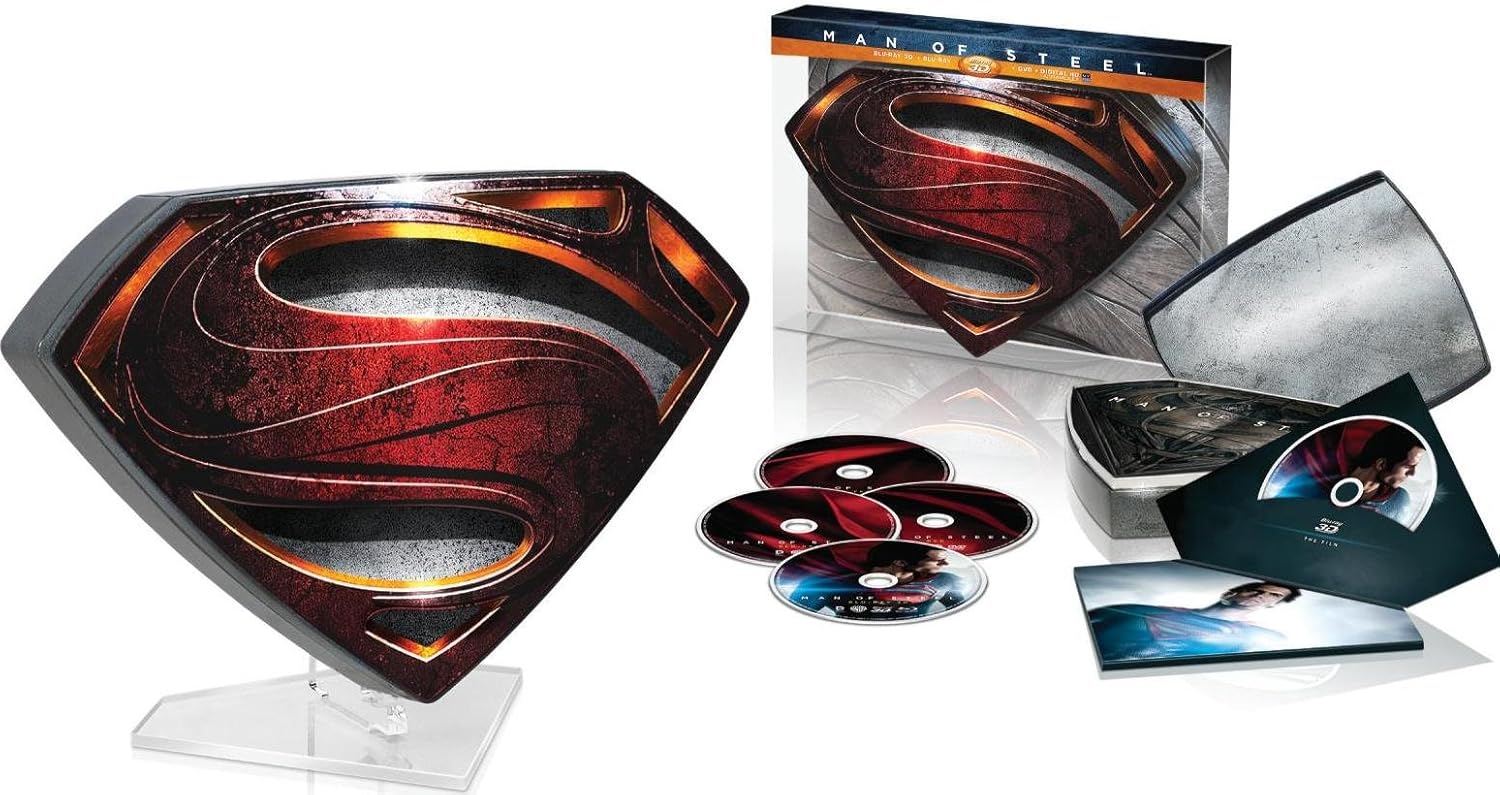
Similar to gaming, digital movies and shows lack certain appealing “benefits”. Digital copies from most services take their time quite a while to drop in price. In fact, I find it a bit comical when Amazon drops the price of something they have to ship to me, but doesn’t decrease the price of the digital version. And of course, being able to resell physical copies and get awesome collectors additions such as the Stargate SG1 collector’s edition or the Superman: Man of Steel collector’s edition.
Stargate SG1 collector’s edition
Superman: Man of Steel collector’s edition


From a personal standpoint, digital content purchasing would be much more appealing if it was priced more competitively. But for now, I think the average consumer is going to stick with purchasing physical copies and streaming. To be honest, collector’s editions could still be amazing if, instead of disks, you received a download code that went along with the collector’s memorabilia.